

The Drae’khar
The Drae’khar – The Heirs of the Gods
"Drae’khar — ithraen’thal" - "Those whose flames preserve the forgotten."
Meaning in Tehând
Drae → Blood, Lineage, Heritage (from ancient Têhand roots; cf. Drae’tharûn, Draen’ith)
→ Symbolizes ancestry, origin, and ancient legacy, often with divine connections.Khar → Storm, Will, Wrath, Divine Power (an archaic draconic term)
→ Represents untamed energy, martial strength, life force – in dragonic context often called the “Inner Flame.”
Lineage and History
The Drae’khar were created as earthly guardians to safeguard the cosmic magic that Faonlin brought into the world through the Wyldheart. They were meant to serve as living bridges between mortals and the divine. Their purpose was to preserve the divine gifts of the Wyldheart (Miryn’Lir’thal), teach the proper use of the unique Thal’ithara magic, and oversee the delicate balance between magic and the world.
The first Drae’khar arose from the scales of the ancient dragons Khev’raen and Kael’Varyn. These scales, infused with pure divine essence, became the pulsating core of their being. Layer by layer, the dragons shaped a body from ash around this heart, completing it with their fire. Thus, the Ithar’nal were born – living reflections of dragons, divine descendants whose essence glowed with every breath. They served as silent archivists of divine knowledge and guardians of the Wyldheart.
When the siblings – Faonlin, Kael’Varyn, and Khev’raen – chose their own earthly paths in Ananthara, the Aen’drael emerged from their lineage. Part of the Drae’khar, the Aen’drael were direct descendants of the dragons, divinely connected through blood and cosmic magic. They carried the Wyldheart within them, united with the essence of their creators, and possessed not only immortal power but also independent consciousness and strong personalities. They became living children of the gods, actively shaping the world while preserving the legacy of their ancestors, as the Ithar’nal gradually receded into the background.
Over time, however, the Drae’khar increasingly intermingled with other peoples. This diluted the purity of their divine bloodline, giving rise in later ages to the Kaen. The Wyldheart still lives within them, but its power is weaker, its magic less stable, and the immortality of the firstborn was lost. Only those who follow the Paths of Ithariel with absolute devotion can rekindle a portion of the old power within themselves – yet even they are denied the eternal lifespan of their ancestors.

Chibi by hiiyuki
Wer die vier Pfade von Ithariel beschreitet und verinnerlicht, kann die Macht eines Reinblüters teilweise erlangen, doch die Unsterblichkeit bleibt ihnen verwehrt.
Diese Mischlinge (Kaen) verbinden göttliche Kraft mit sterblicher Existenz, wodurch ihr Weg zu Weisheit, Macht und Verantwortung zu einer Mischung aus Disziplin, Spiritualität und der natürlichen Begrenztheit des Lebens wird.
The Great Purification
When the Ancient Dragons fell, their lineage plunged into the abyss with them. Chaos spread across Ananthara, and some of their own children – the Aen’drael – attempted to assert control over the mortal peoples. Three of them – Vidzac, Cerastes, and Lun’faen – initially sought to fulfill their inherited duty, but the weight of their legacy eventually broke them.
They established trials designed to ensure that the Thal’ithara could only be wielded by those deemed worthy and controllable. Those who failed lost the ability to use magic; their memories, which kept the Wyldheart alive, were taken or altered. This gave rise to the first Soulless, while many others suppressed their powers out of fear of the same fate.
Unrest spread among the peoples, the power of the Wyldheart weakened, and a rot slowly crept across Ananthara. The three Aen’drael soon noticed the growing decline of magic and the devastation sweeping the land. Vidzac believed that only pureblooded descendants should control the Wyldheart and its magic – the Thal’ithara – and sought not only to forbid its use but to strip the magic entirely from the peoples. Cerastes and [insert name] argued instead for a return to the roots, advocating for sharing the power.
Everything collapsed. The peoples rose against the Aen’drael, sparking a war that claimed countless lives. Ananthara, however, never fully recovered from this dark era. Since then, all Drae’khar, Aen’drael or otherwise, have been met with suspicion, hunted, and often unwelcome. Their temples and ritual sites in the mountains are now ruins – silent witnesses to a time when divine blood and hubris were intertwined.
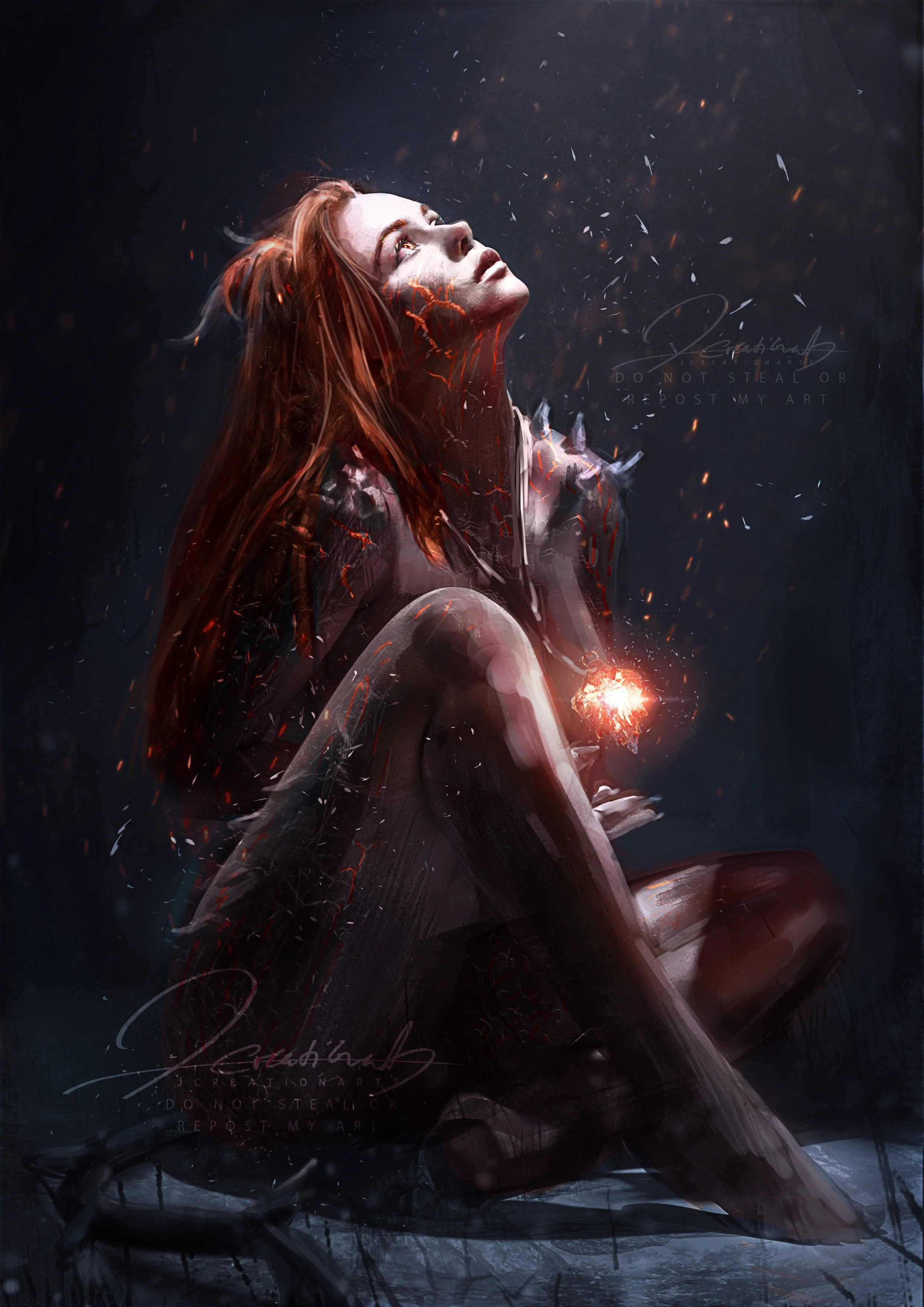
Art by me
"When the gods fell and the people rose in turmoil, the Aen’drael emerged – some as guardians, others as judges. The world trembled, and from ash and blood arose the Great Purification, a force that would change everything forever." – Wyldheart Chronicles
Appearance and Details
General Appearance
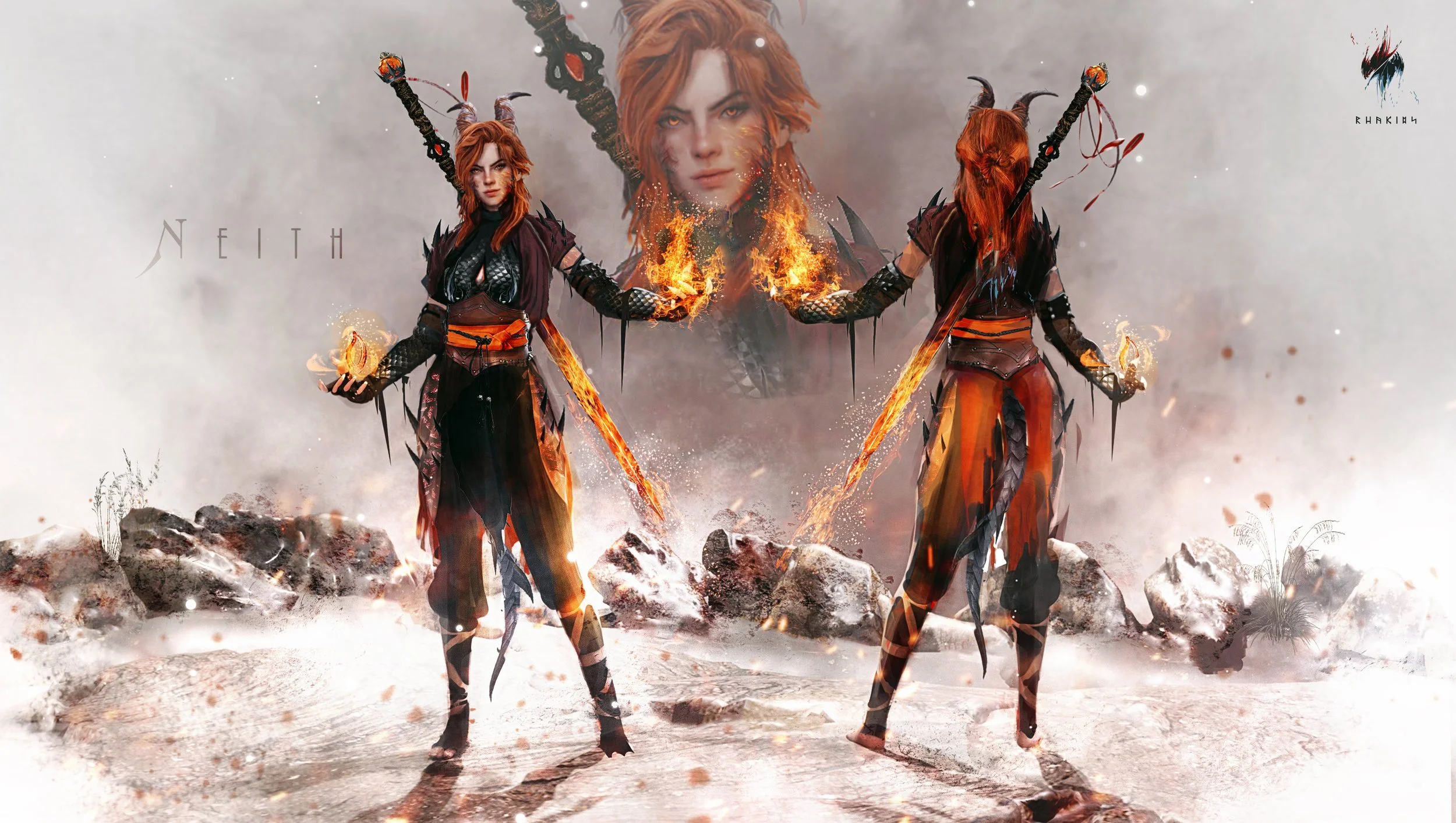
The Drae’khar are humanoid beings with pronounced draconic features. They have horns, pointed ears, glowing eyes (varying in shape depending on lineage), scaled skin patches, and graceful, muscular physiques. Their draconic breath and other traits, such as scales, differ according to their dragon lineage:
Kael’Varyn Line (Fire): Warm red tones with glowing accents along the scales, fiery veins.
Khev’raen Line (Ice & Water): Cool blue shades, crystalline reflections, frost-covered scales.
Faonlin Line (Nature): Earthy greens and browns with glowing, plant-like patterns and vine motifs on the skin.
Thal‘veris Line: Unknown.
-
Their appearance is immortalized in countless myths and songs, yet they remain largely unseen—a legend in itself.
Etymology:
Ithar: Essence, Divine
Nal: Heart, Core, Source
Meaning: "The Heart of the Divine" or "The Divine Core"
→ Origin of the DivineLegends describe the Scales-Alvae as majestic draconic beings. Their bodies are covered in strong, flexible muscles and entirely encased in scales that shimmer in varying hues depending on lineage—from deep sapphire blue to glowing red and radiant emerald green. Fine, glowing veins run between the scales, pulsating like fiery breath and making their inner fire—the draconic breath—visible.
Their heads resemble ancient dragons, elongated with prominent horns that differ in shape and direction based on bloodline. Some have curved, antler-like horns, while others bear jagged, backward-pointing spikes. Their large, vertical-slit eyes shine in vivid colors—typically gold, copper, ice blue, or emerald.
Limbs end in sharp, grasping claws, and their long, powerful tails provide balance and serve as formidable weapons in combat.
-
Pronunciation: Aen-dra-el
Etymology:
Aen: Origin, Creation
Drael: Bloodline, Divine Heritage
A defining feature of the Aen’drael, the divine descendants, is their dragon breath: glowing, pulsating veins that run across their skin and scales, like a flame burning within them. The colors of this inner fire vary depending on their lineage.
Their bodies are a striking blend of dragon and human traits—half covered in dragon scales, spines, and armor-like skin, while the other half retains more human characteristics. The balance between these aspects is unique to each individual, creating a seamless and majestic hybrid form.
Some Aen’drael use magic to conceal their draconic features among mortals, while others proudly display them—from shimmering scales to reptilian features and elaborately shaped horns unique to each individual.
As heirs of the ancient dragons, they also possess the gift of shape-shifting, capable of assuming the full, awe-inspiring form of their dragon ancestors. However, over centuries, this ability has largely been forgotten and can now only be mastered by those who have completed the Four Paths of Ithariel.
-
Etymology:
Kaen: Transience, Mortality
Legend: Many believe that the Syl’kaen hold the key to restoring the purity of the ancient dragon lines.
Appearance: Unlike their divine ancestors, the Syl’kaen were not born with majestic horns, allowing them to move unnoticed in society. Yet their draconic heritage remains undeniable.
They may have a dragon-like tail, scattered scales along the back, shoulders, or temples—small but unmistakable markers of their lineage.
Otherwise, their bodies appear largely human, influenced by their mixed ancestry. Some feature a fine, almost metallic skin texture, while others display the faint glow of dragonfire in their eyes or, in moments of intense emotion, reveal the shimmering breath of a dragon within.
Culture and Lifestyle of the Drae’khar
Before their cities and temples were desecrated, the Drae’khar built their settlements in locations that reflected the essence of their divine creators:
Kael’Varyn Temples: Lava fields, smoking craters, and glowing domes.
Khev’raen Temples: Glacier peaks, sparkling bridges, and crystalline towers.
Faonlin Temples: Dense forests, cascading waterfalls, living tree structures, and hanging gardens.
Thal‘veris: Unknown
Each temple complex was a masterpiece of architecture and nature: pagoda-like towers spiraled elegantly upward, waterfalls tumbled through streets, mist drifted along moss-covered pathways, and luminous crystals reflected the surrounding light.
The Drae’khar capital combines the elements of all dragon lineages in harmonious symbiosis. Rivers, bridges, and hanging gardens merge to create a city where nature, magic, and architecture coexist as a living whole.
Here beats the heart of Drae’khar culture: festivals, schools, magical practices, and assemblies occur without strict hierarchies, as society is based on respect, knowledge, and mutual support. Each member lives in harmony with the teachings of the gods, the four paths of Ithariel, and the philosophy of the dragons, which emphasizes acceptance, tolerance, and balance.

Note from the Order of Truth
"Born of dragon blood and cosmic fire, they carry the legacy of the gods within them."
The Drae’khar are a people who preserve divine power and wisdom through the bloodlines of the ancient dragons, while their descendants have developed humanity, adaptability, and mortality. Their cities and temples reflect the elements of their dragon heritage, their society thrives in harmony without rulers, their magic pulses in sync with the Wyldheart, and their legends are living testaments to the presence of Faonlin and the dragons across Ananthara."
Read more
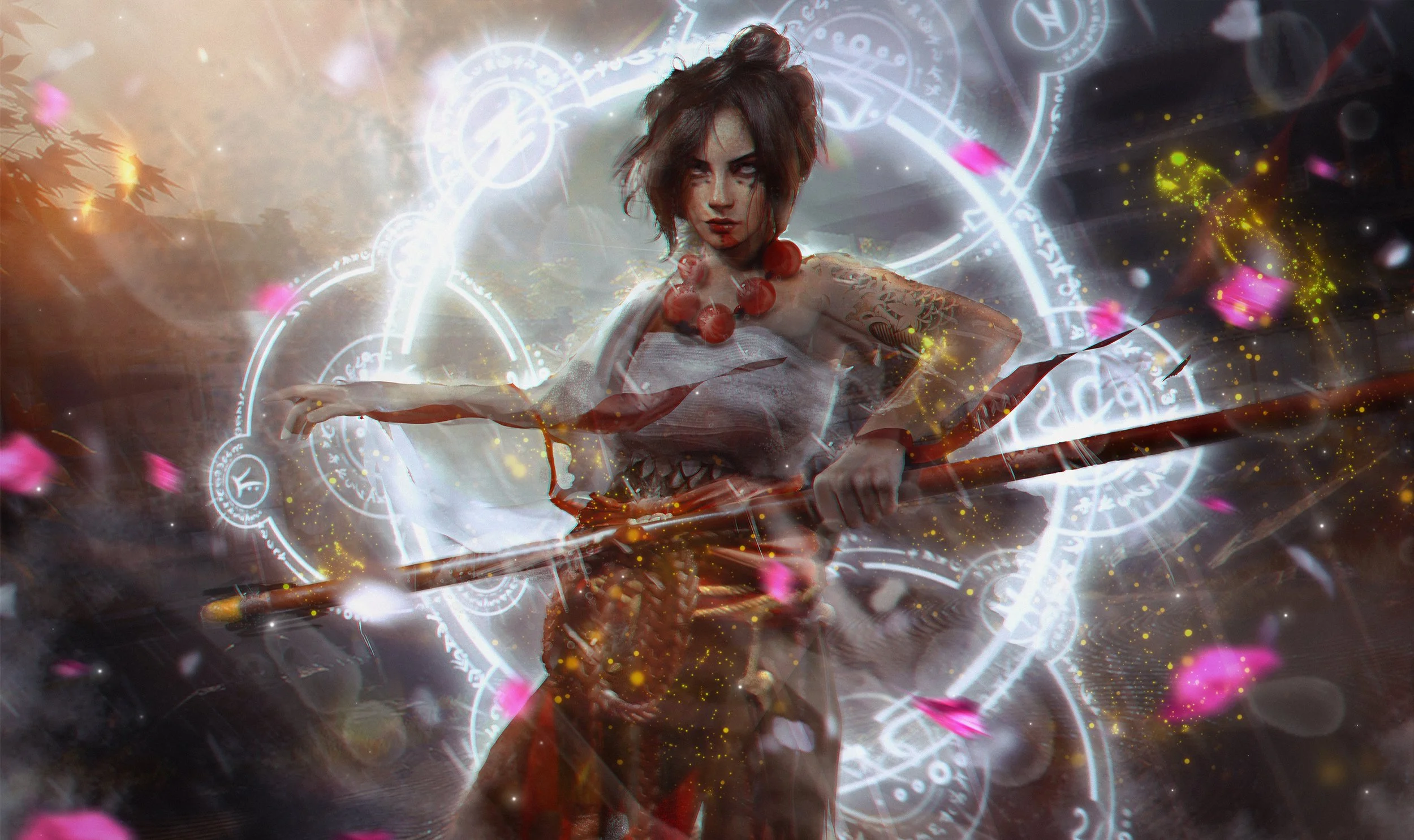


The Dur’kaen are not only skilled smiths, researchers, and shamans – they are the guardians of dragonblood, with their bodies, skin, and magic directly connected to the mountains and magical mineral flows. From the Children’s Fire Trial to the ancient rituals of the Call of the Mountain, they craft weapons, structures, and artifacts that preserve the legacy of the dragons. Discover how their flame, rituals, and knowledge shape the world of Ananthara.